Uxxu Guides
Deep guides for architecture teams
Browse long-form reference guides on the C4 model, architecture communication, and the practices teams use to keep complex systems understandable over time.
These guides are written for engineers, architects, tech leads, and product-minded technical teams who need more than a quick tutorial. The goal is not only to explain what a diagram is, but to explain why a particular level of abstraction matters, what decisions the diagram should support, and how the same model can help humans and LLMs reason about the architecture in a shared way.
Quick Summary
How to use the guides section
This section is built for readers who want a clear path from theory to practice.
- Start with a broad guide if you need a common architecture vocabulary.
- Jump into a specific section when you are solving one concrete modeling problem.
- Use the guides as reference material during reviews, onboarding, and diagram work.
Featured guide
Guide to Understanding the C4 Model
A reference guide to understanding the C4 Model and using its levels of abstraction to communicate software architecture clearly across teams and tools.
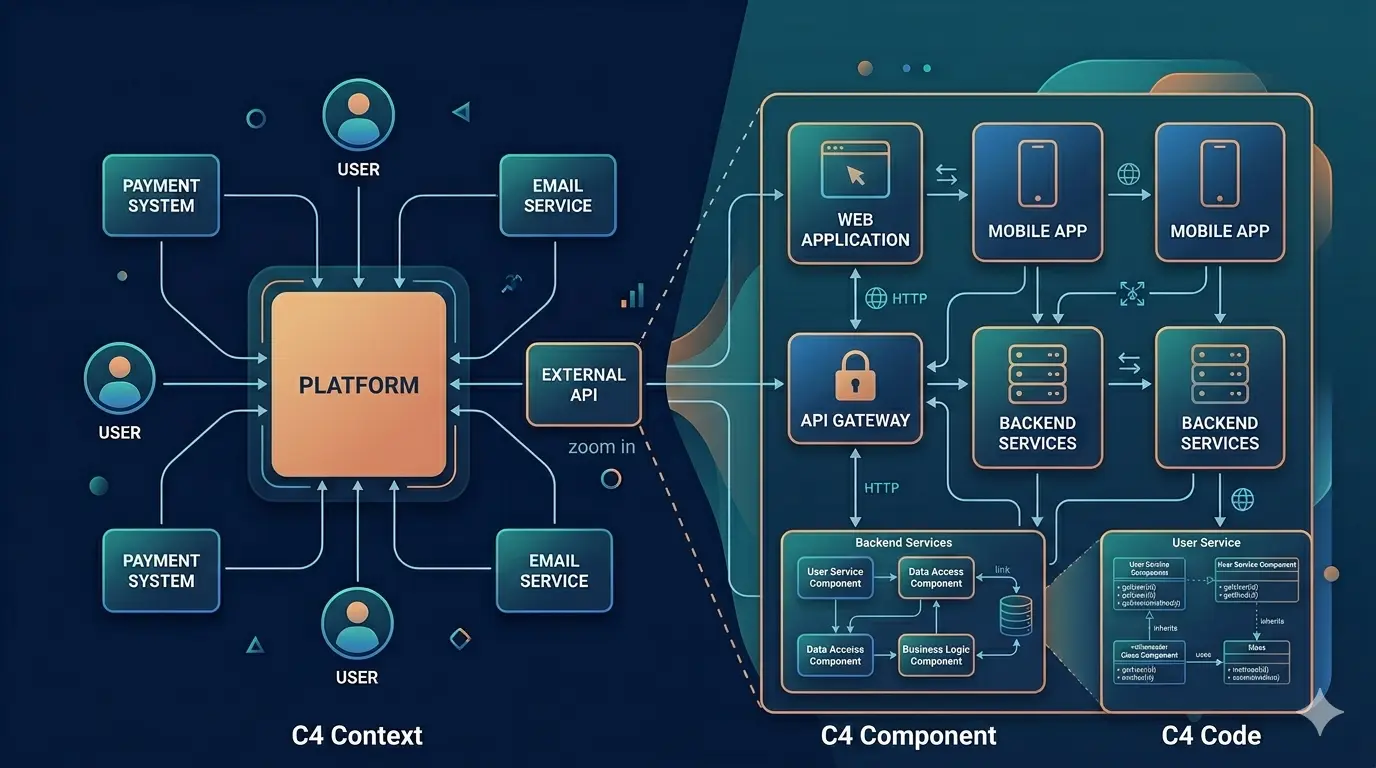
Guide to Understanding the C4 Model
A reference guide to understanding the C4 Model and using its levels of abstraction to communicate software architecture clearly across teams and tools.
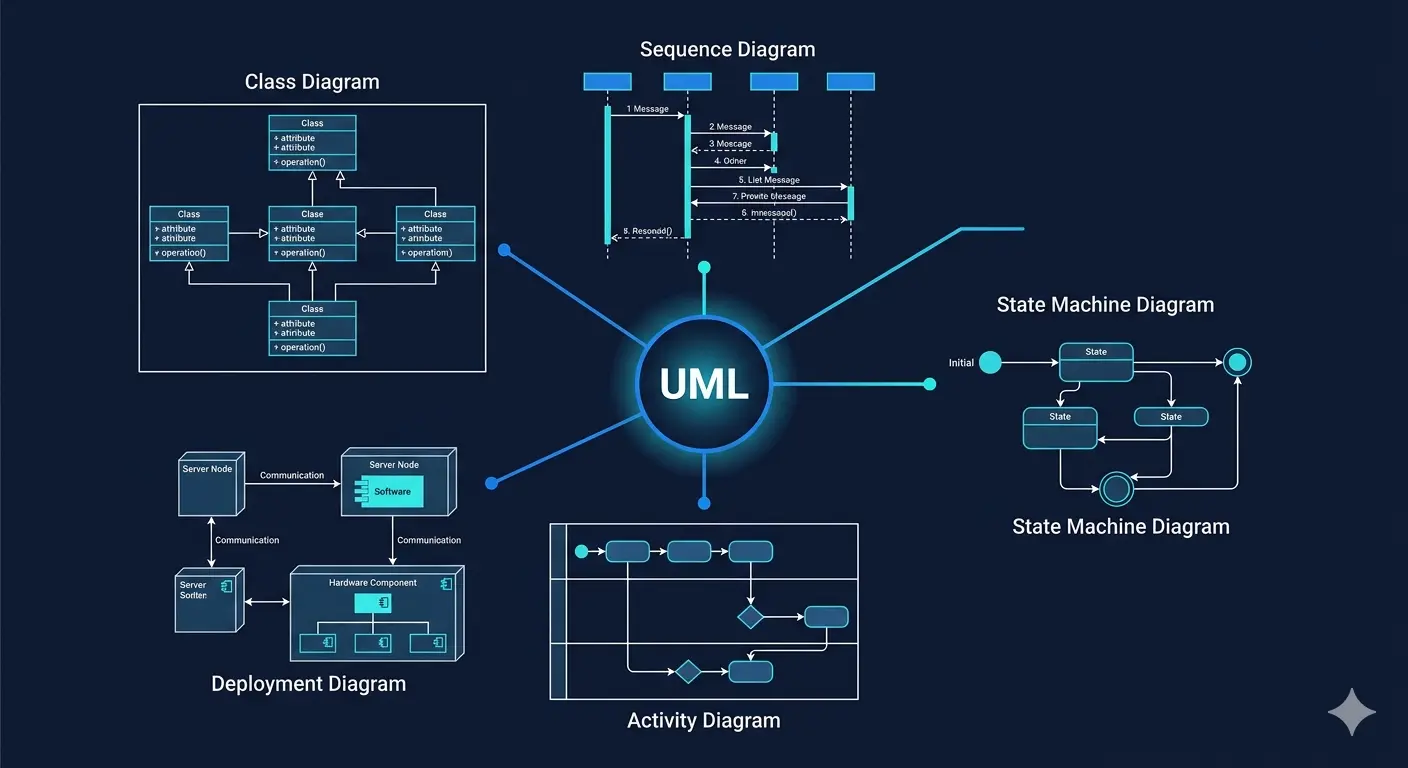
The Definitive Guide to UML
A reference guide to understanding and applying UML for software design, architecture communication, and structural and behavioral modeling views.

How to embed uxxu.io architecture diagrams anywhere
Step-by-step guide to embedding live, interactive uxxu.io C4 architecture diagrams in Notion, Medium, your website, React apps, and plain HTML — with copy-paste code for each.

The Definitive Guide to Microservices Architecture
A reference guide to understanding, designing, and operating microservices systems with clearer boundaries, communication patterns, and tradeoffs.

The Definitive Guide to Monolithic Architecture
A reference guide to understanding, designing, and operating monolithic software systems, and knowing when a monolith is the right architectural choice.
What makes a guide different
A guide is where we go deeper than a blog post or a quick feature overview. Instead of only introducing a concept, we try to make the tradeoffs explicit: what belongs in a System Context diagram, where teams usually over-model, when a Container view is the right abstraction, and how to keep architecture documentation useful as the system changes.
Who these guides are for
They are meant for teams that need durable architecture understanding, not just one-off diagrams. That includes people onboarding into a new codebase, staff and principal engineers trying to communicate structural decisions, platform teams defining internal boundaries, and anyone using Uxxu as a shared source of truth for architecture conversations.
How to use this section
Start with the broader reference material like the C4 guide if you want a common language, then move into more specific templates, blog articles, or LLM workflow pages depending on what problem you are solving. The intention is to give teams a path from theory to concrete diagramming practice without losing the architectural reasoning in between.
Why architecture guides matter
Most teams do not struggle because they have no diagrams. They struggle because they have diagrams without a shared modeling language, diagrams that are too shallow to support engineering decisions, or documentation that explains a system only at one level of abstraction. A useful guide helps teams choose the right level of detail for the conversation they are having.
That is why this section exists. We want the guides area to be a durable reference library for architecture thinking: how to use the C4 model well, how to communicate boundaries clearly, how to connect diagrams to real software systems, and how to use Uxxu as more than a drawing surface. The best architecture documentation is not just visual. It is navigable, layered, and consistent enough that humans and AI tools can reason from the same model.
If the blog is where we publish timely articles and practical viewpoints, the guides section is where we keep the more reference-grade material that teams can return to repeatedly. It is designed to be useful whether you are building your first C4 diagram, introducing architecture modeling to your team, or teaching an LLM how to work with your system through structured context instead of a wall of prose.